
LAND CLEARANCE and Rare Plants In South texas
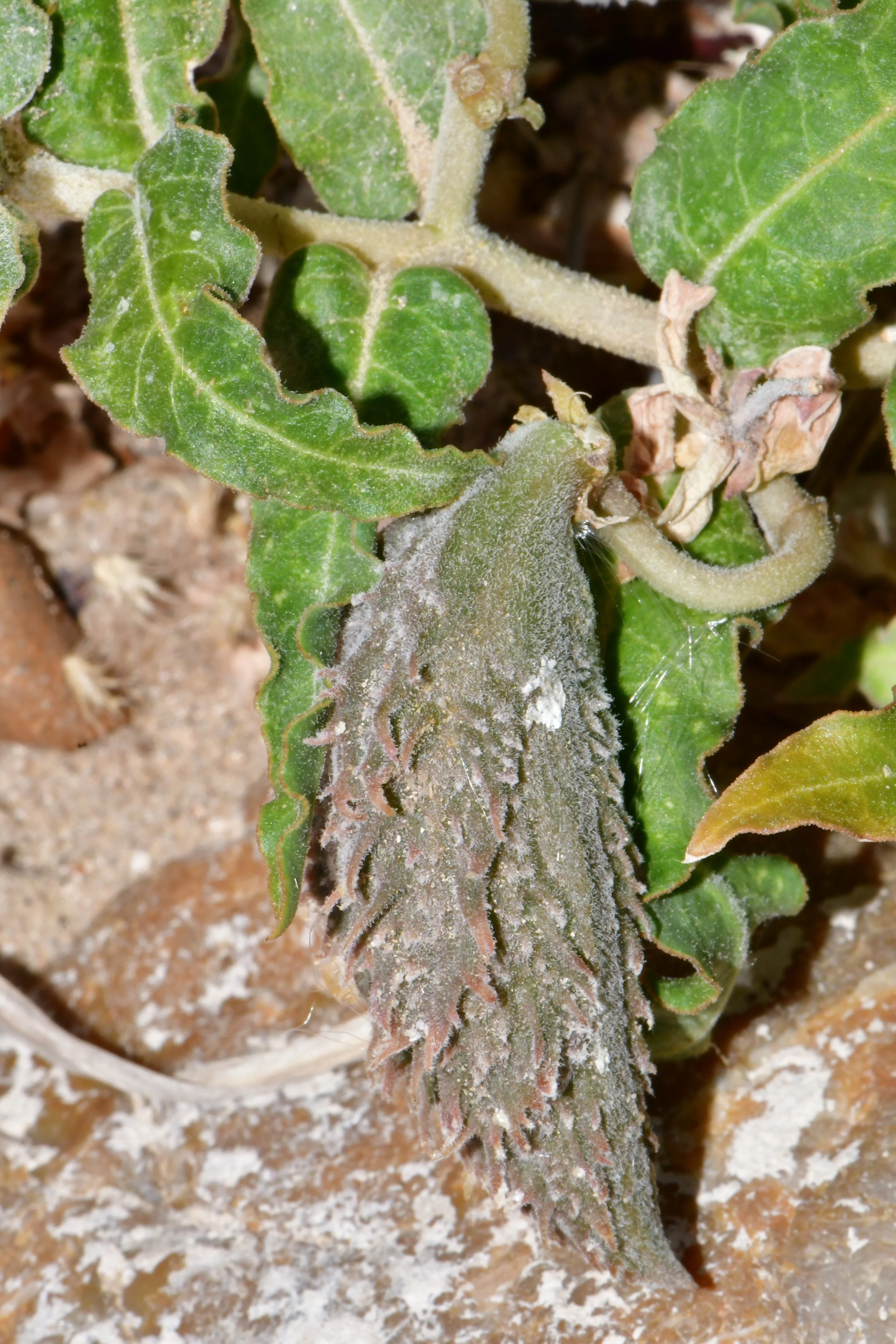
Recently I drove through some spots in South Texas that I frequent to check on the plants there. The temperature was 99 F, but I have grown accustomed to living in the 24-hour Bikram Yoga Studio that is South Texas. I came across many of my favorite members of this plant community in fruit and producing seed, including the rare Asclepias prostrata. Another friend had bagged the seed in order to propagate and cultivate seedlings of this rare plant for a botanic garden in hopes of establishing an ex-situ population of it should the wild populations ever get knocked out (or more likely bulldozed, as Texas affords literally no protections for many of its rare plants). I collected the seed, and tied the bags around the remaining fruits (termed follicles in the case of the Apocynaceae), as the fruits split open when mature and disperse the seeds. Milkweed seeds have a feathery “ploof” attached to them called a coma, making them easily dispersed by wind, thus tying mesh bags around them is necessary.
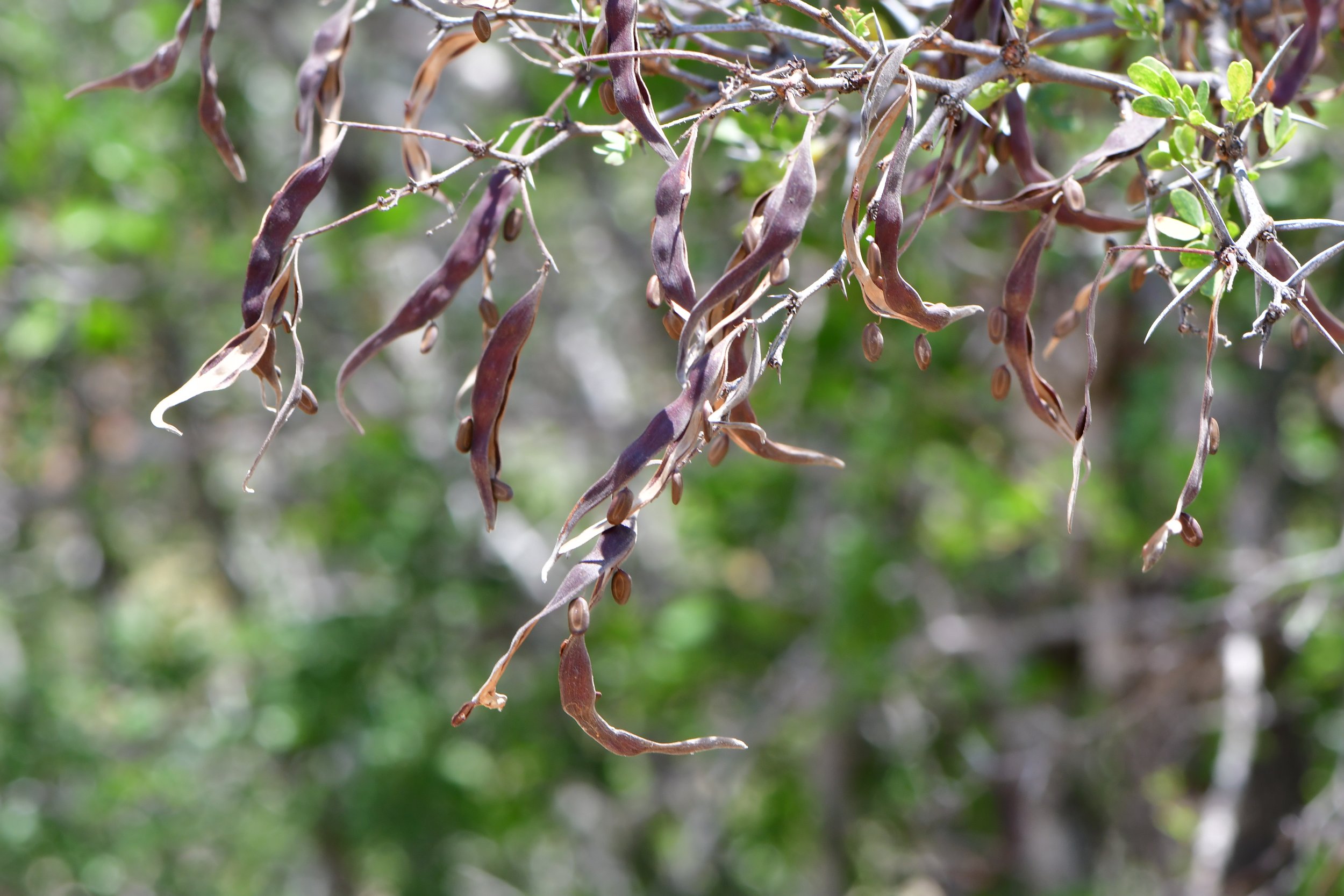
I also collected seed of Vachellia (formerly Acacia, until it was determined by DNA - as well as common sense - that Acacia was not monophyletic) rigidula, a plant that was incorrectly assumed to contain psychoactive alkaloids in a 98 paper. I believe this was later retracted, but many legumes - and mimosoids specifically - do produce a diverse array of interesting secondary chemicals. My reverence for Vachellia rigidula (also known as black brush) lies not in its chemistry however, but in its ecological importance in its habitat. This tough little legume shrub provides shade for a number of very cool and very rare cacti to grow under, including peyote. Very cacti in South Texas grow out in the open - temperatures are too hot and the sun too strong to make that a photosynthetically prosperous place to grow. The heat and the intense UV will simply shut down photosynthesis in such extreme amounts. So the best place to grow - as the habitat is so extreme - is in the shade of shrubs. And one of the most common shrubs that serves that purpose is a spiny little legume that produces wonderful-smelling flowers called Vachellia rigidula.
I was disappointed to see yet more land clearance, though. I got some photos with a drone, and they are disheartening, showing extensive land clearance. This land clearance is incentivized by the state and local government here, the idea that clearing the land makes it “productive”. It seems a rather shit-for-brained concept, and indeed it is. But again, the culture down here seems to HATE the thornscrub. It is seen as good for nothing save for maybe providing habitat for over-populated deer, of which an entire local industry is centered around (a friend of mine in the area actually ranches deer, which seems to make a lot more sense in this area than ranching cows). I’ve always been somewhat surprised at how undervalued this landscape is. To me, it is one of the most fascinating biological communities in the US, containing plants that grow nowhere else save for maybe a few places in Northeastern Mexico. It does take a rather unenlightened approach to view this habitat as garbage, but view things like McDonalds and Walmart as precious. But the way around this kind of bunk values system is to attempt to slowly change the culture by showing it, not lecturing or shaming it, why such habitat is so freaking cool. How else will local residents realize what biological riches they are living amongst. Quite a few of them already do, but not nearly enough to guarantee that this habitat won’t all be gone or destroyed in thirty years. As it stands now, there is no large preserve anywhere in this region. I hope I live to one day see people here using and appreciating this landscape for botanizing/hiking/ exploring/ revering. I think of how cool it would be if there was something like a peyote preserve or a hiking trail with labels and ids on one member of each plant species for identification and education, to put things in context for the public and show them how invaluable the thornscrub is.
Maybe one day.






A HOTSPOT OF DIVERSITY and ENDEMISM IN SOUTH TEXAS


If you’re ever driving Highway 281 South of San Antonio, be sure to stop a lot. And if any of your passengers complain, threaten to leave them on the side of the road. This area, known colloquially as the “Texas Sandsheet” is a hotspot of quite a few plants that grow nowhere else in the world. As we’ve seen many times, a change-up in the geology or substrate of a given region offers a selection pressure for plants to speciate and for new species to evolve. We see this with serpentine, with gypsum, with bare limestone, and with….sand. These “Eolian” sands were deposited over millions of years from the Southeast and the nearby Gulf. Pictured above are some of the rarities that grow on this substrate. If you drive this area between March and August, when temps are the hottest (and most dangersous lol), you will be treated to some rarities and very beautiful, very cool plants that you won’t see if you’re speeding past them at 80 mph. This is the home of the (not yet blooming) Silverleaf Sunflower, Helianthus argophyllus, an annual sunflower with wooly leaves that resembles a Q-tip and which can grow to heights of 15’ in a single season. It has been hybridized with crop sunflowers in various regions to produce a more heat and drought tolerant sunflower. It’s an amazing plant and a beast and does well in cultivation. It’s seeds are also important as hell for migrating birds.
Something peculiar on the dry limestone prairie of texas…
Last week I got a heads up from a concerned party that the rare Silphium albiflorum, a texas endemic member of a genus of prairie “sunflower” that I’ve been obsessed with ever since learning about the related Silphium terebinthinaceum that grows on the tall-grass prairie (or what’s left of it, at least, which is not very much) of Illinois. The entire genus Silphium is actually pretty cool, and if you live in the midwest or Eastern United States and enjoy plants, I suggest you quickly acquaint yourself with this fucking phenomenal genus.
Anyway, Silphium albiflorum first caught my attention because of how restricted it seems to be compared to the other dozen or so members of the genus. For one, Silphium albiflorum produces white flowers. And second, it occupies a very specific kind of habitat known as dry limestone prairie. We normally think of prairies having a very rich topsoil, due to the thousands of years of which plants have been growing and then dying on them, their old dead tissue forming a very nitrogen rich kind of natural compost. The prairie ecosystem is an ecosystem like no other, and I find it utterly fucking tragic if not outright offensive that many people - myself included - can grow up in regions where this ecosystem was once the dominant plant community and have no idea what a prairie is or what were some of the plants that once grew there. So much of it has been lost and bulldozed to erect the kind of garbage, automobile-slum suburban commercial cesspools that now constitute much of our intellectually and ecologically decrepit American landscape.
Most prairies have a rich topsoil, but dry limestone prairie barely has any topsoil. Dry limestone prairie acts as an “island” of dry habitat where much more arid-adapted plants will thrive compared to some of the more rich and soil-having areas further North or East. And as a result, this different and more stressful habitat provided an opportunity for the very cool Silphium albiflorum to eventually evolve and speciate out of its presumed sister-species (or their shared common ancestor), however many millions of years ago that was.
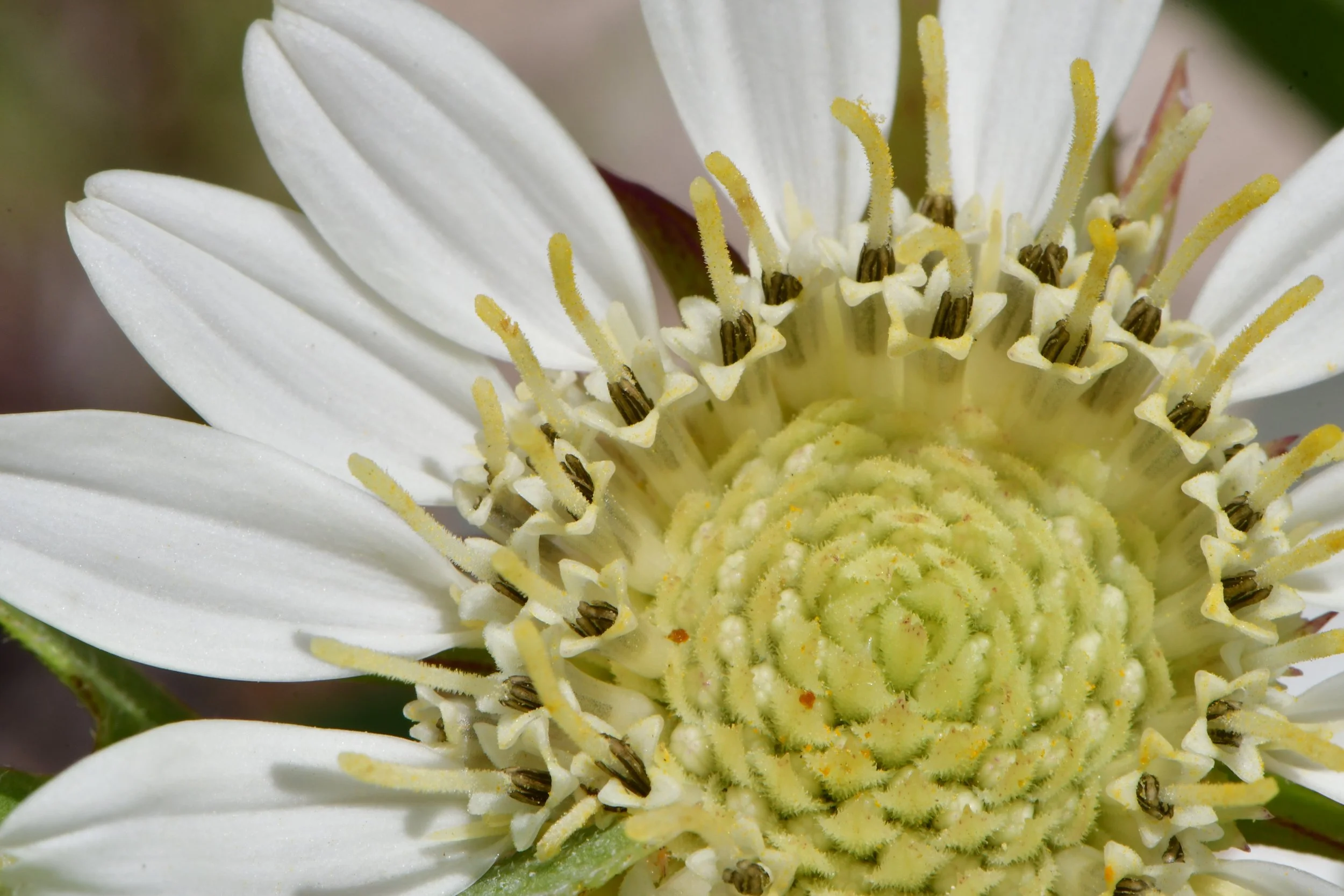
Silphium albiflorum resembles Silphium laciniatum in leaf, but that’s about all. Silphium laciniatum is a much more widespread species and a much more robust species, growing much taller than albiflorum and with yellow flowers. It also prefers deeper richer soils. Silphium albiflorum is a stouter and presumably much tougher plant, growing on very rocky, harsh limestone substrates (almost no soil present) and with a tap-root that has been measured at more than 15 feet in depth (you can watch a very cool youtube presentation on it here : https://www.youtube.com/watch?v=yznZ18uJABs). Not to mention that S. albiflorum produces white flowers and flowers much earlier in the season than most of the other Silphium species. Like all members of the genus Silphium, S. albiflorums ray florets (Asteraceae terminology knowledge required. If you don’t have any check out this video: https://www.youtube.com/watch?v=D44YgtQraXY&t=131s) are female (pistillate), and the disc florets are male (staminate), so only the ray florets (the ligulate florets) mature into seeds. Most Asteraceae flowers tend to be bisexual.
Overall, Silphium albiflorum seems to have evolved simply because its environment provided an opportunity to do so. Without the existence of these dry limestone prairies and their harsh growing conditions which acted as a selection pressure and a different habitat from the surrounding deeper-soiled blackland prairie, Silphium albiflorum would have never evolved. This species gives us a great example - in the heart of a very populated area - to understand how evolution works and how environment shapes the trajectory of plant evolution.



Fog Deserts of Chile


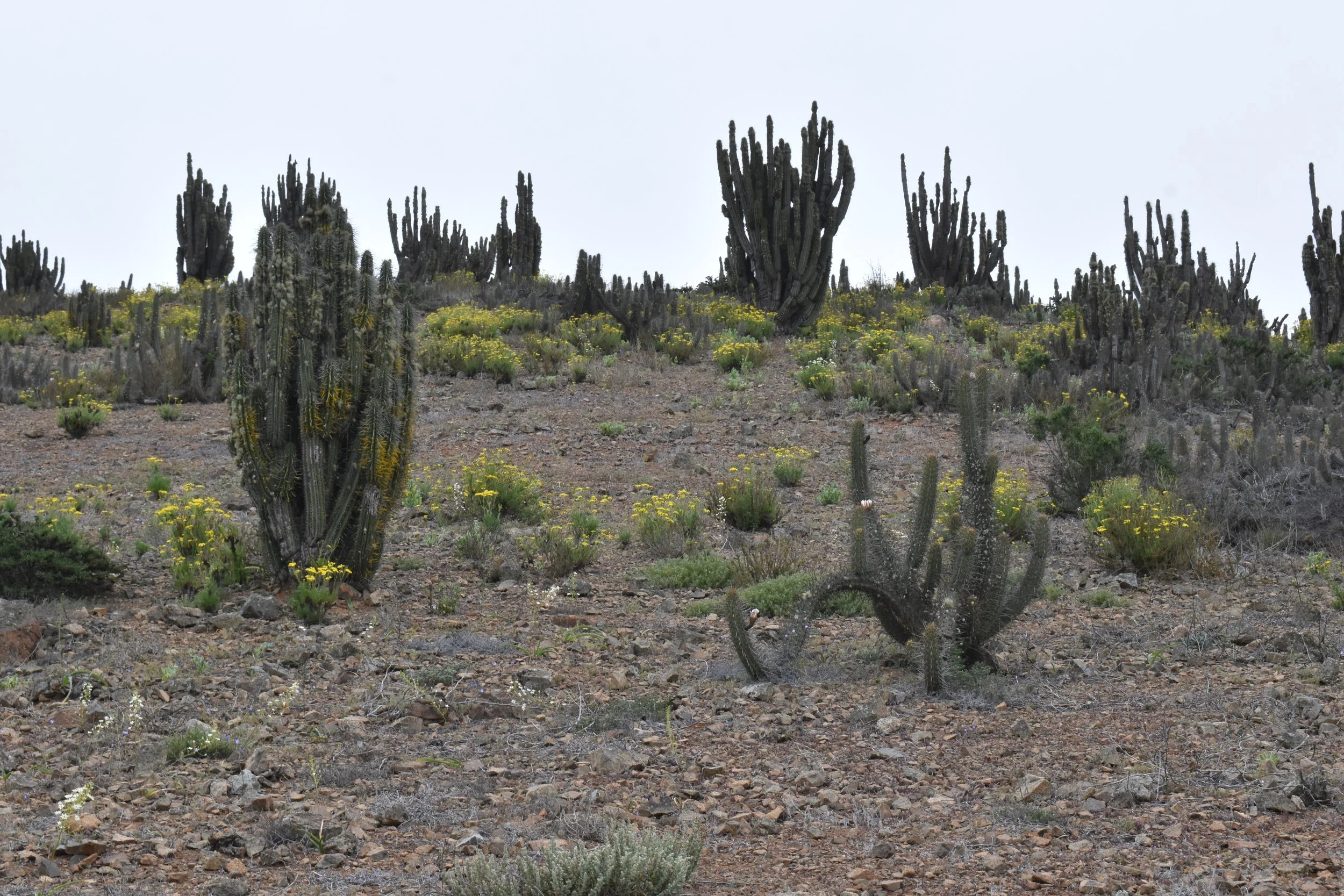


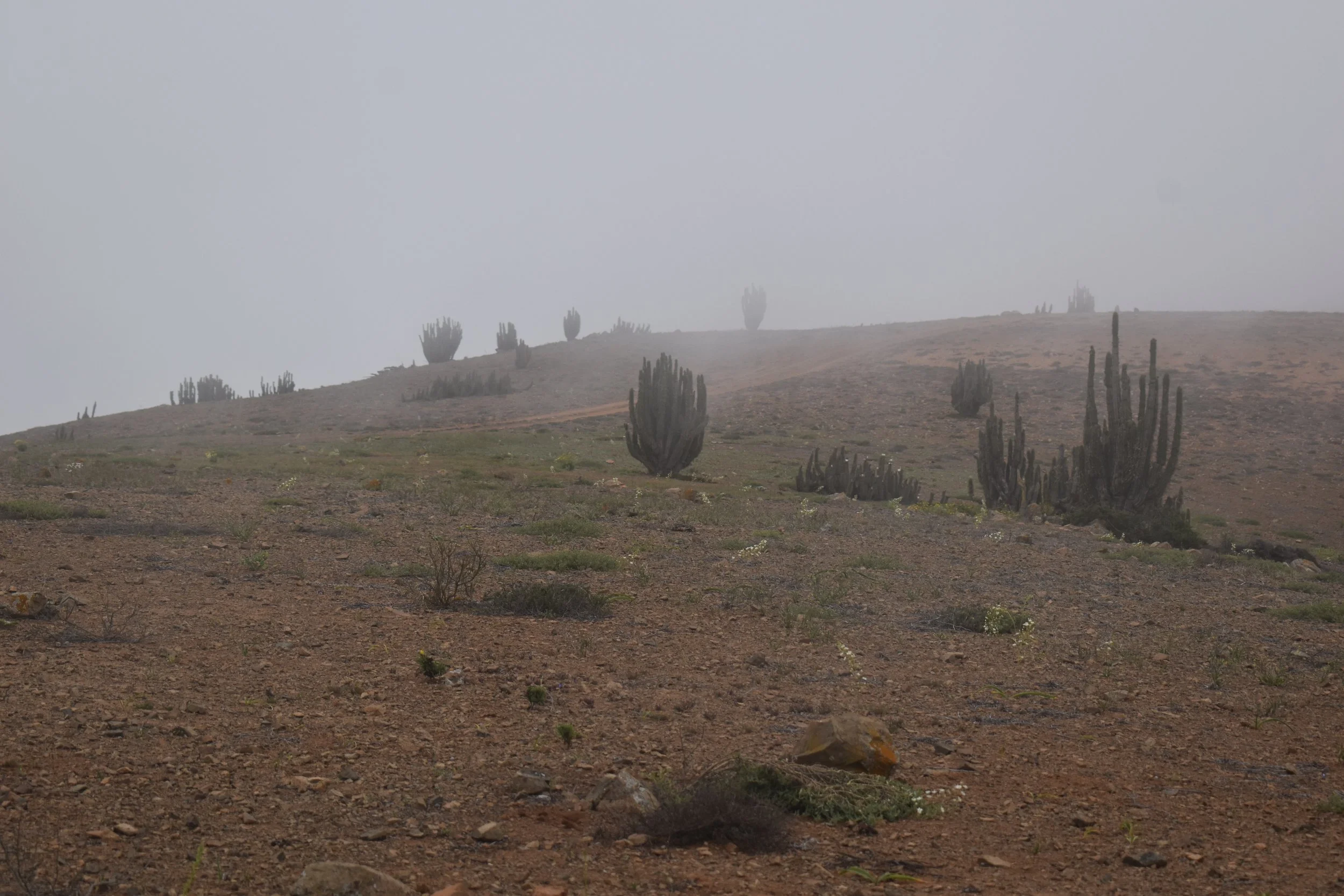


Whenever I am botanizing an area, I usually end up taking hundreds of photos in a single day. This habit of mine started during a Psilocybe session sometime years ago while I was walking around a remote area of the Mojave Desert, looking for plants and rocks. As Psilocybe is, generally speaking, an incredible “sensitizer”, it made me much more aware then I otherwise would have been of subtle nuances of not just the floral and vegetative morphology of plants, but also of subtle nuances in the landscape. In many ways, it helped to make me a better and more astute observer. At the end of that day, I realize I had taken upwards of 500 photos of what was a small area of land. I rarely botanize under the influence of Psilocybe anymore, but I have found that that experience started a habit that was an otherwise invaluable tool for learning plants and learning a landscape to me - take tons of photos, even if they are of things that you initially may not find much interest in. Later on, when you are referencing those photos - perhaps even years into the future - they may teach you things that you initially did not notice or pay attention to.
I bring this up because tonight I was looking at some of the pictures of coastal Northern Chile that I took during a single afternoon when I was down there in late 2019. To see massive organ-pipe-like arrays of Eulychnia taltalensis, covered in what had to easily be 12 or 13 different species of lichen, is something I grateful I took enough photos of to be able to study again in retrospect. Species featured here are, in order from Left to Right - Oxalis gigantea, Oxalis caesia, Chaetanthera glabrata, Eulychnia taltalensis, Paposoa laeta (formerly Rhodophiala pratensis. Amaryllidaceae), Trichocereus deserticola, Loasa nitida, Copiapoa gigantea.
SPeaking of ENDOPARASITES…
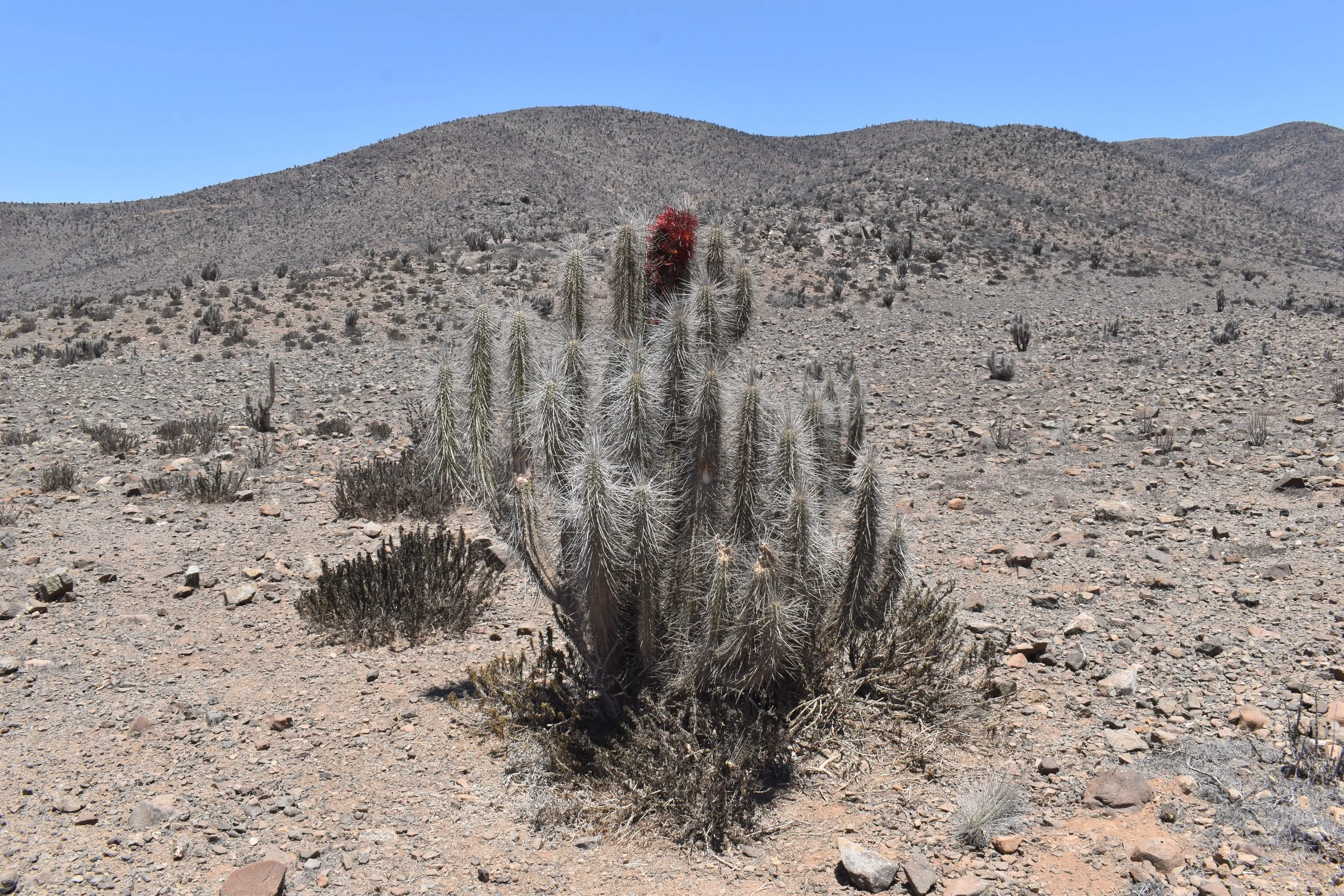
Inspired by the last post, I realized I might as well post photos of another, unrelated endoparasite from Chile. Tristerix aphyllus is a member of the tropical mistletoe family, Loranthaceae. Loranthaceae is a really cool family of parasites and hemiparasites that occurs worldwide at lower latitudes. Australia has some really cool members of this family, most notably a tree-sized parasite known as Nuytsia floribunda, known as a christmas parasite because it flowers around Christmas time (the Southern Hemisphere summer). But again, we’re talking endoparasitism here and that’s what makes Tristerix so remarkable. This plant spends 99% of it’s life living inside it’s host, which are cacti in the genera Trichocereus (specifically Trichocereus chiloensis) and Eulychnia). As the flowers are tube-shaped and red, it is obvious that hummingbirds are their main pollinators, which is not surprising because hummingbirds are extremely species-rich in the “new world” (both North and South America). Tristerix is a genus of roughly 14 species, but most are not endoparasites. Further, not only are other species of Tristerix not endoparasites, but they are hemiparasites, meaning they produce leaves with chlorophyll in them and can produce some of their own carbohydrates (food) via photosynthesis (so they are, in effect, only partially parasitic).




Endoparasites I have KNown : Pilostyles thurberi (cucurbitales)
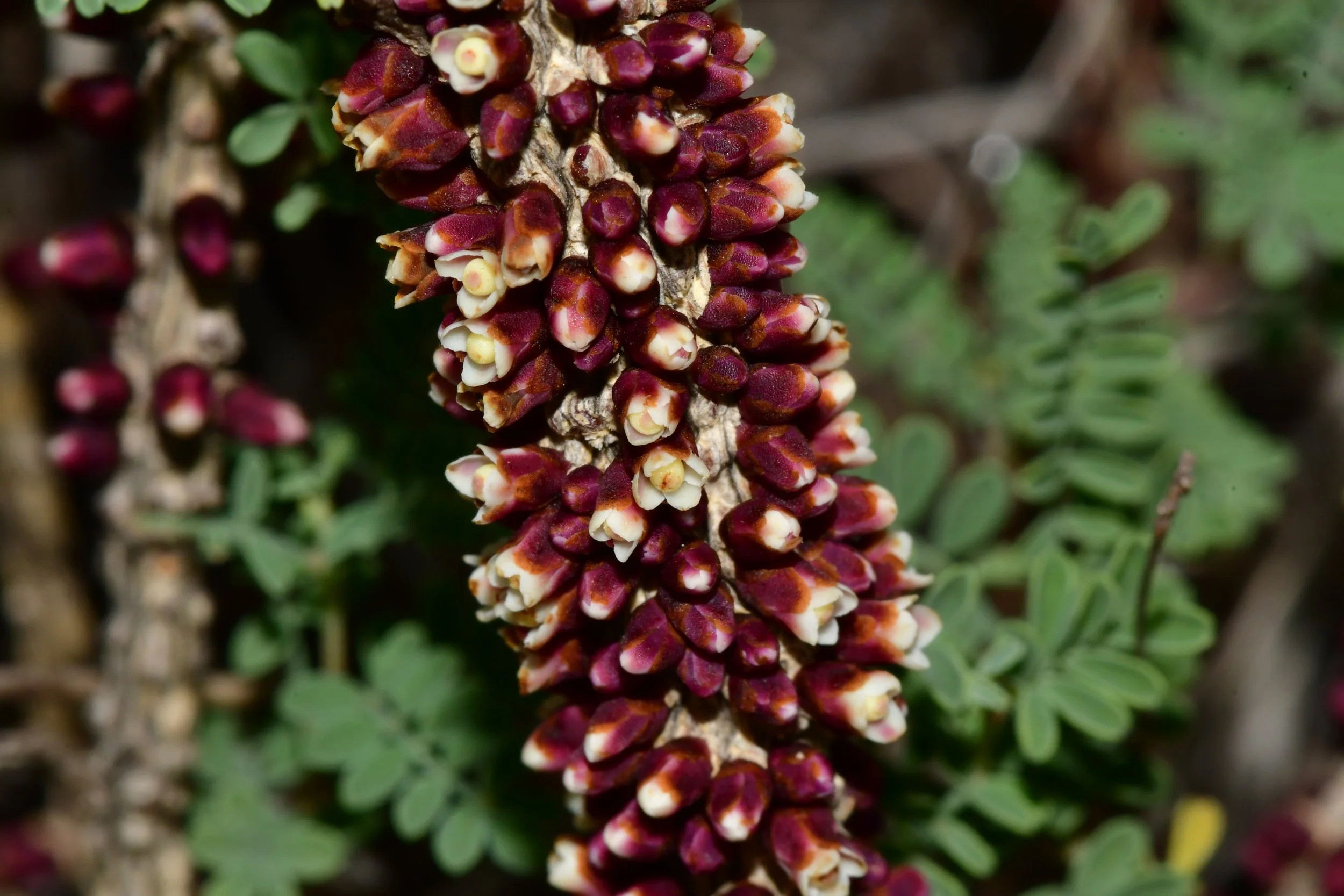
Pilostyles thurberi might be one of the most bizarre plants (I know I say that shit all the time - there are a lot of bizarre plants) in North America. It spends 99% of it’s life living INSIDE another plant, only emerging to flower. This is a characteristic called being “endoparasitic”, and my only other experience with an endoparasite was the plant Tristerix aphylla which is an endoparasite of columnar cacti in the genera Trichocereus and Eulychnia in Chile.
When Pilostyles decides it is time to flower, little clusters of tiny mahogany flowers with white interiors burst out of the epidermal tissue of the host plant. In the case of the plant I saw in West Texas, the host plant was Dalea frutescens but Pilostyles can also parasitize the genus Psorothamnus or a few other plants in the tribe Amorpheae of the Pea Family, Fabaceae.
It was long thought that Pilostyles was related to another parasitic plant, the genus Rafflesia which occurs in humid jungles of Southeast Asia, yet DNA sequencing later proved this to not be the case. It turns out that Pilostyles is more closely related to cucumbers and squash (order Cucurbitales) than it is to Rafflesia. Pilostyles thurberi is dioecious, so individual plants either produce male or female flowers. At this particular remote location in Sutton County, Texas, there seemed to be 4 or 5 individual plants in a single, small population of Dalea frutescens.
As far as the genus itself, whats equally bizarre is its distribution - there are 11 species of Pilostyles (with a new one being described in Colombia) and they are widespread. Australia has its own Pilostyles species as does the Middle East, reportedly. How exactly does a genus become so widespread? Is it just an old lineage that evolved before continental drift had placed the continents at their current location? Was it dispersed by some now extinct bird sometime relatively recently (ie the last ten million years)? And how does Pilostyles get around and what do the fruits look like and how do they germinate on the host plant? Does the host plant suffer any ill effects as a result of the parasite (most hosts here appeared to be robust despite the drought and despite being infected with Pilostyles)? Is it possible to cultivate Pilostyles if you’re already growing the host plant? How did something like this evolve (ie were there a specific set of environmental conditions or mutations that made parasitism more adaptive then just doing what most successful plants do - growing prodigiously and producing abundant fruit?
These are the paths my mind always goes down when my curiosity descends on a new taxon. There are so many questions to ask and every answer will seemingly only open up ten more questions.


New Website nice
Put together this website real nice to serve as a central repository for art prints, the podcast, merch, botany videos, contact info, news, and what-the-shit. If you appreciate the light hearted take on serious science education, Please support the on going work of Crime Pays But Botany Doesn’t: check out store and buy something, buy an art print, join the Patreon, or just send some cash via Venmo to @societyishell